

Caregiver Guide Findings: What We Heard and What Comes Next
Category: Current Projects
Date: May 2026
At our recent Aging Services Council meeting, members and community partners came together to review the current Caregiving in Central Texas: A Community Resource Guide and share feedback on how it can better serve caregivers, families, and professionals.
The goal of the workshop was simple: understand what is working, what feels confusing, what may be missing, and how the guide can become easier to use for caregivers who may be overwhelmed or unsure where to begin.
What We Heard
Participants shared that the Caregiver Guide contains valuable information, but the current format can be difficult to navigate. The feedback showed a clear need to make the guide more caregiver-centered, easier to follow, and more practical for someone looking for help quickly.
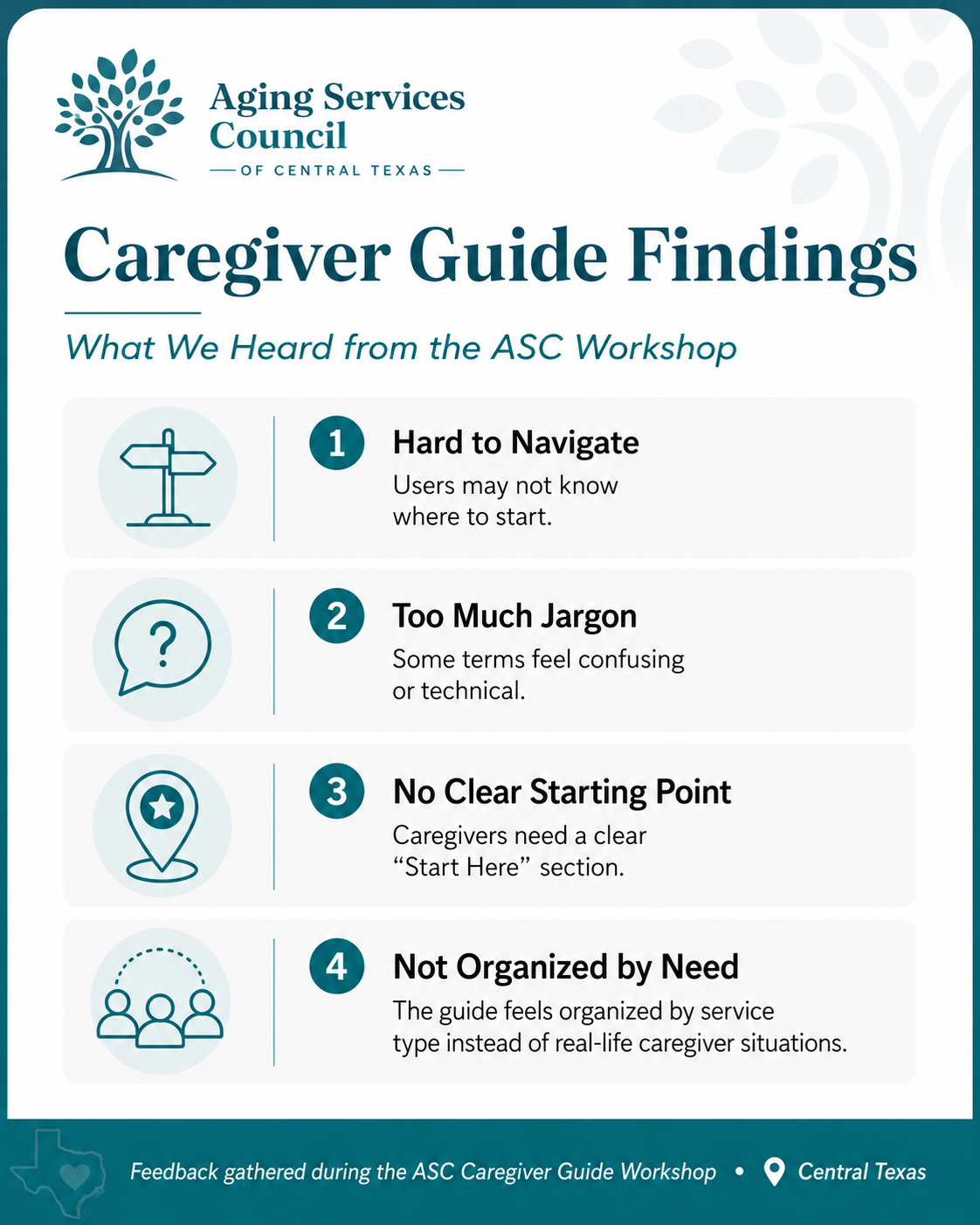
The most common concerns included:
The guide can be hard to navigate
Some language includes too much jargon
There is no clear starting point
The guide is organized more by service type than by caregiver need
Top Priorities Identified
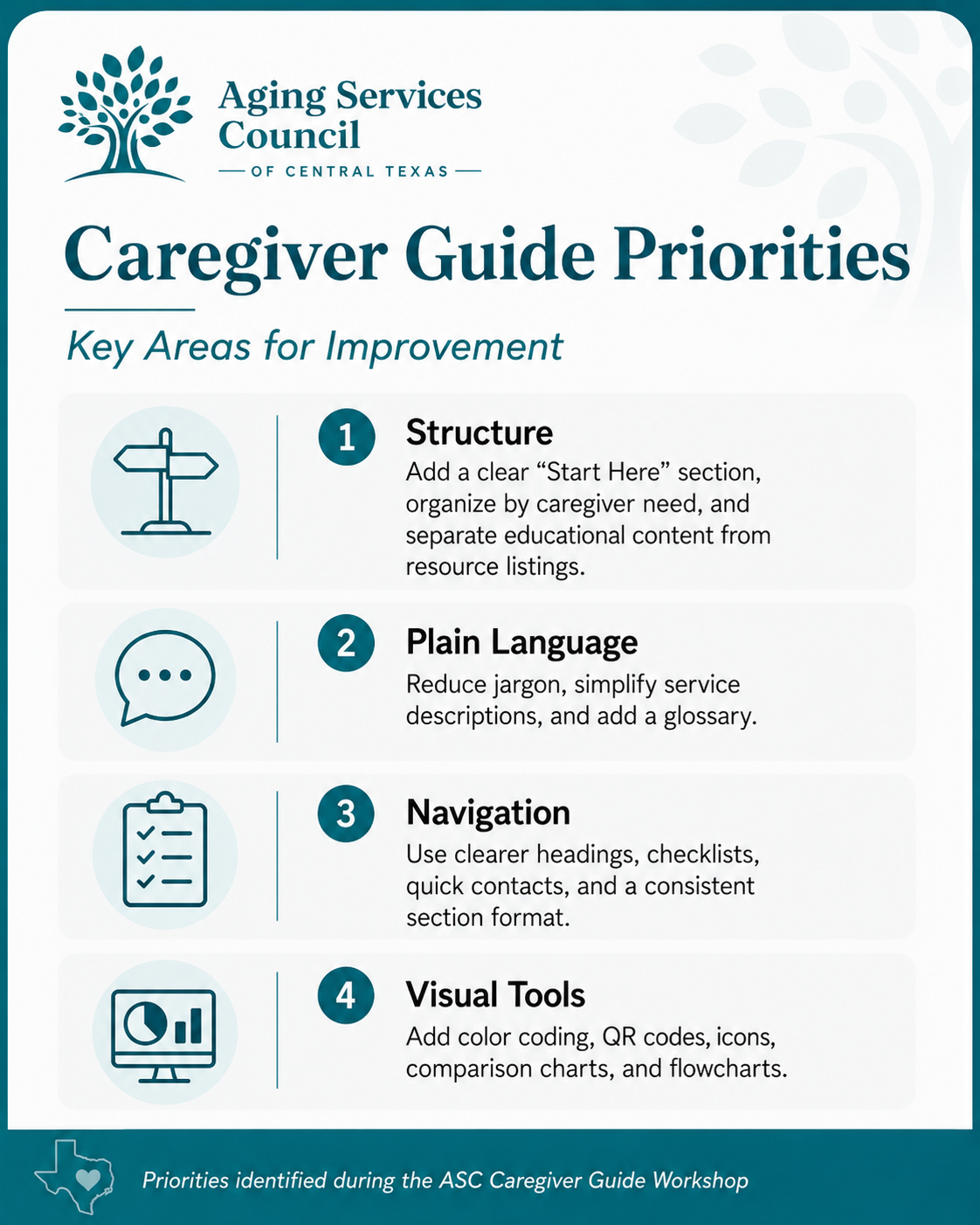
1. Create a Clearer Structure
Participants recommended reorganizing the guide around caregiver needs and real-life situations. Instead of expecting users to already know what service category they need, the guide should help them identify their situation first and then connect them to the right information.
Suggested improvements included adding a clear “Start Here” section, creating step-by-step flows, and separating educational information from resource listings.
2. Use Plain Language
Participants emphasized that the guide should be easier for caregivers and family members to understand, especially during stressful moments. Feedback included reducing technical terms, simplifying service descriptions, and adding a glossary for commonly used terms.
Examples of terms that may need clearer explanations include respite, home health, home care, Medicaid, Medicare, palliative care, hospice, guardianship, and advance directives.
3. Improve Navigation
Participants recommended adding clearer headings, quick-reference boxes, checklists, quick-access contacts, and a consistent format across sections. A caregiver-friendly flow was also suggested:
Start Here → Quick Help → Resources → Education
4. Add Visual Tools
Participants suggested visual elements that could make the guide easier to understand and more engaging, including color coding, QR codes, comparison charts, simple icons, flowcharts, checklists, and quick-reference pages.
Possible comparison charts could include:
Medicare vs. Medicaid
Home health vs. home care
Hospice vs. palliative care
Assisted living vs. nursing home
Adult day care vs. in-home care
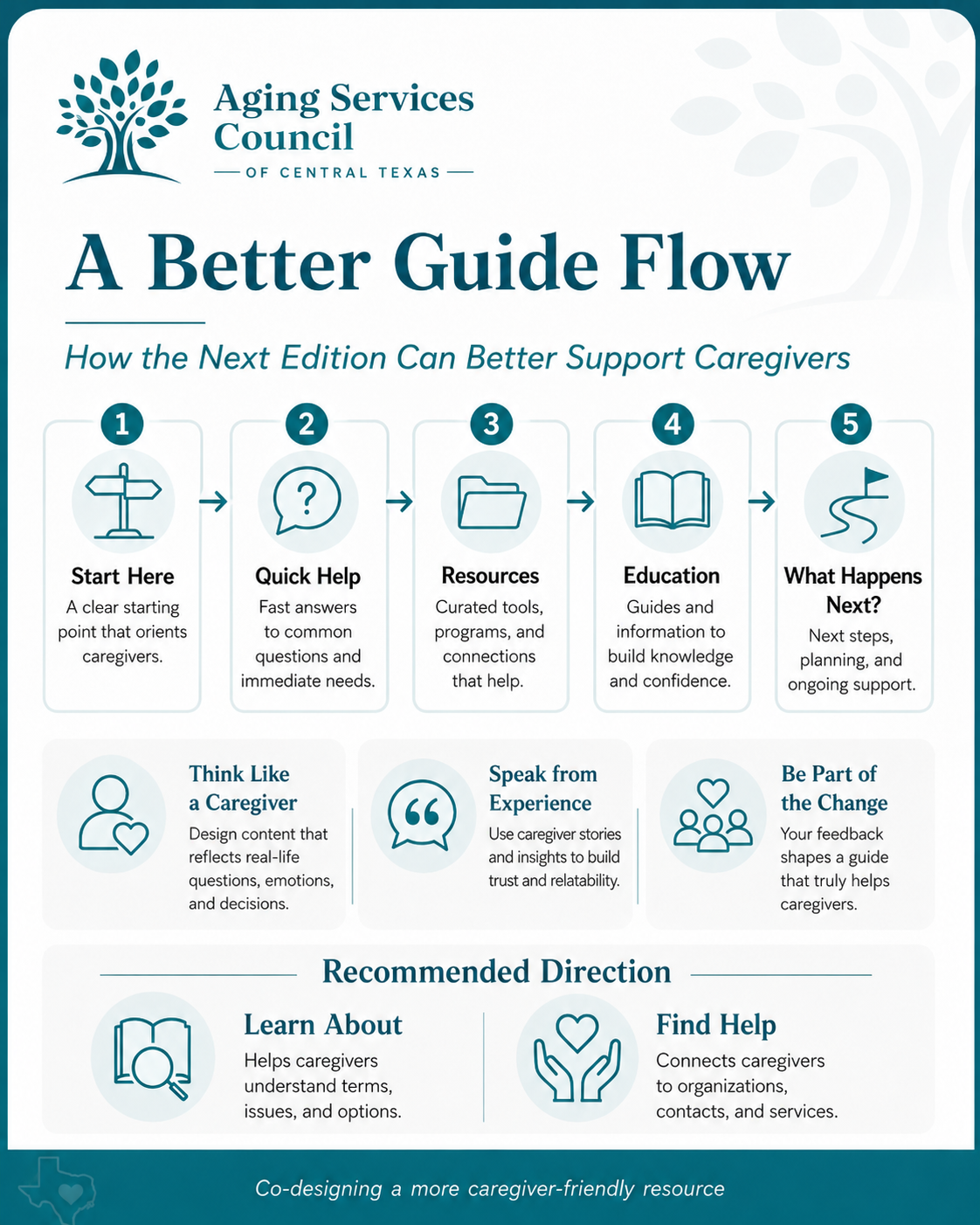
A Better User Flow
One of the strongest ideas from the workshop was creating a more natural path for caregivers using the guide.
Participants suggested:
Start Here → Quick Help → Resources → Education → Next Steps
While a formal “Next Steps” section may not work for every organization or service, the idea could become an educational section called “What Happens After I Reach Out for Services?” This would help caregivers understand what to expect after making a call, leaving a voicemail, completing a screening, submitting an application, receiving a referral, or waiting for follow-up.
Recommended Direction
Based on the workshop findings, the revised guide may move toward a clearer two-part structure:
Learn About
Educational topics that help caregivers understand common issues, terms, options, and decisions before reaching out for services.
Find Help
Resource listings that connect caregivers to organizations, programs, phone numbers, websites, addresses, counties served, and eligibility information.
This structure would make the guide easier to use and easier to update over time.
Proposed Guide Sections
The workshop feedback supports organizing the guide into broader, caregiver-friendly sections, including:
Start Here
Safety, Rights, and Planning
Health, Mental Health, and Conditions
Daily Living and In-Home Support
Benefits, Food, Housing, and Transportation
Connection, Learning, and Caregiver Well-Being
What Comes Next
The feedback from the ASC Caregiver Guide workshop will help shape the next edition of the guide. The strongest recommendations were to make the guide easier to navigate, organize it by caregiver need, use plain language, add a glossary, include checklists and quick-access contacts, and separate educational content from the resource directory.
Most importantly, the revised guide should help caregivers feel less overwhelmed and more confident about where to begin, what questions to ask, and how to connect with the right support.
Thank you to everyone who participated, shared ideas, and helped us move toward a stronger, more caregiver-centered resource for Central Texas.